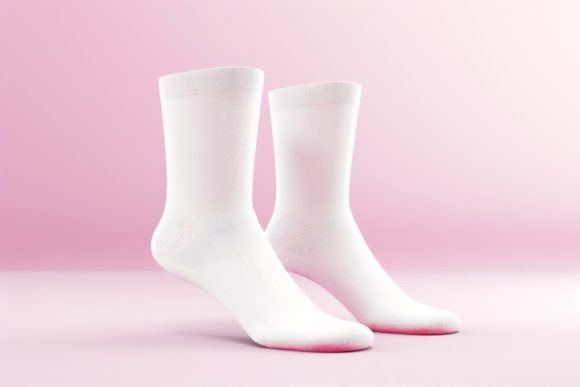
3D Socks Mockup Picture: Elevating Your Design Presentations
In the competitive world of digital design and e-commerce, the gap between a good idea and a successful sale is often bridged by presentation. Whether you are an independent artist, a print-on-demand entrepreneur, or a branding agency, showcasing your work in a realistic context is crucial. This is where a 3D Socks Mockup Picture becomes an indispensable tool. It transforms flat, two-dimensional artwork into a tangible, three-dimensional visual that helps clients and customers envision the final product.
Unlike traditional photography, which requires physical samples, lighting setups, and models, a high-quality mockup allows you to visualize your designs instantly. By utilizing a Socks Mockup Picture, you can display patterns, artwork, print designs, and photos with professional polish. This article explores how these digital assets work, why they are valuable, and how you can integrate them into your workflow to enhance your creative presentations.
Understanding the Power of 3D Visualization
The term "mockup" refers to a full-scale or scaled model used for design evaluation, promotion, or other purposes. In the digital realm, a 3D Socks Mockup Picture is a pre-rendered image of a sock, typically created using advanced 3D modeling software. These images are designed with smart layers or masking techniques that allow designers to overlay their own graphics seamlessly.
The primary advantage of using a 3D approach is realism. A flat JPEG of a pattern does not convey how the fabric stretches, folds, or interacts with light. A well-crafted mockup accounts for the curvature of the foot, the tension of the material around the ankle, and the natural shadows cast by the garment. When you place your design on top of such a picture, it inherits these realistic properties, making the final output look like a photograph of a physical product rather than a digital composite.
Key Features and Technical Specifications
To ensure your designs look professional, the quality of the base mockup is paramount. When selecting a Socks Mockup Picture, pay attention to the following technical details:
- High Resolution: Look for files with at least 3000×2000 pixels. This ensures that your design remains crisp and detailed, even when viewed on high-density displays or when printed in large formats for portfolios.
- DPI Settings: A resolution of 300 DPI (dots per inch) is the industry standard for print-quality images. This guarantees that there is no pixelation or blurriness when the image is zoomed in or printed.
- Color Mode: Most digital mockups come in RGB color mode, which is ideal for screen-based presentations, websites, and social media. If you are preparing for physical print catalogs, ensure you understand how to convert these files to CMYK if necessary, though RGB is standard for online use.
- File Format: While the final output is often a JPG, the working file should ideally be compatible with layer-based editing software like Adobe Photoshop. This allows you to place your design on a separate layer above the background.
Practical Applications for Creators and Businesses
The versatility of a 3D Socks Mockup Picture extends beyond simple product listings. It is a versatile asset for various stages of the design and marketing process. Here are several scenarios where these mockups prove invaluable:
- E-Commerce Product Listings: Online shoppers cannot touch or try on products. A realistic mockup helps bridge this sensory gap. By showing how a pattern wraps around the heel and toe, you reduce uncertainty and potentially lower return rates.
- Client Presentations: If you are a freelance designer working on custom patterns for a client, sending a flat tile of the pattern can be underwhelming. Using a Socks Mockup Picture allows you to show the client exactly how their brand colors and logos will appear on the actual garment, facilitating faster approval.
- Social Media Marketing: Eye-catching visuals perform better on platforms like Instagram and Pinterest. A 3D mockup provides a lifestyle feel without the cost of a photoshoot, making it perfect for promoting new collections or limited-edition drops.
- Portfolio Development: For artists and textile designers, a portfolio filled with flat squares of patterns can look repetitive. Mockups add variety and context, demonstrating your ability to apply art to real-world products.
How to Use Your Socks Mockup Effectively
Using a mockup is straightforward, but achieving a professional result requires attention to detail. Here is a step-by-step guide to integrating your design into a 3D Socks Mockup Picture:
Step 1: Preparation
Download the high-resolution JPG file. Ensure your design artwork is ready and saved in a format that supports transparency, such as PNG, if your design does not cover the entire sock. If your design is a seamless pattern, ensure it is tiled correctly.
Step 2: Importing into Software
Open the mockup file in Photoshop or a similar image editing application. Locate the layer designated for your design. This is often labeled as "Place Your Design Here" or similar. If the file is a flat JPG without layers, you will need to use blending modes and masking tools manually.
Step 3: Placing Your Artwork
Drag and drop your design onto the mockup layer. Resize and rotate it to fit the contours of the sock. Most high-quality mockups use "Smart Objects" in Photoshop, which automatically warp your design to fit the 3D shape. If not, you may need to use the "Distort" or "Warp" tools to match the perspective.
Step 4: Adjusting Blending and Shadows
To make the design look natural, adjust the blending mode. "Multiply" is often effective for darker socks, while "Overlay" or "Soft Light" might work better for lighter fabrics. Pay attention to the shadows and highlights already present in the mockup; your design should respect these light sources to maintain realism.
Step 5: Final Export
Once satisfied with the placement and appearance, flatten the image or merge the visible layers. Save the final file as a high-quality JPG for web use or a PNG if you need transparency for further compositing.
Considerations and Limitations
While a Socks Mockup Picture is a powerful tool, it is important to have realistic expectations. Mockups are simulations, not replacements for physical prototypes. There are limitations to consider:
- Fabric Texture: Not all mockups accurately represent every type of fabric. A mockup designed for thick cotton crew socks may not look accurate if you are designing sheer nylon stockings. Always choose a mockup that matches the material you intend to produce.
- Color Accuracy: Screens display colors differently. The RGB colors you see on your monitor may differ slightly from the dyed fabric in real life. Always order a physical sample before mass production to verify color fidelity.
- Design Complexity: Highly intricate details may get lost if the mockup resolution is low or if the blending modes are too aggressive. Test your designs on different parts of the sock to ensure legibility.
Choosing the Right Mockup for Your Needs
Not all mockups are created equal. When evaluating a 3D Socks Mockup Picture, consider the angle and style. Do you need a top-down view, a side profile, or a perspective shot? The angle should complement your design. For example, a pattern that runs vertically along the leg is best showcased in a side profile, while an all-over print might benefit from a dynamic angle that shows multiple planes of the sock.
Additionally, consider the background. Some mockups come with clean white backgrounds, ideal for e-commerce marketplaces like Amazon or eBay. Others feature lifestyle backgrounds, such as wooden floors or urban settings, which are better for social media and brand storytelling. Choose a background that aligns with your brand identity.
Conclusion
Incorporating a 3D Socks Mockup Picture into your design workflow is a smart investment for any creator or business owner. It offers a cost-effective, efficient, and visually stunning way to present your artwork. By leveraging high-resolution, 300 DPI files and understanding how to manipulate them in editing software, you can create compelling visuals that resonate with your audience.
Remember, the goal is not just to show a design, but to sell a vision. A well-executed mockup tells a story about quality, fit, and style. Whether you are launching a new brand, pitching to a client, or updating your online store, these tools provide the professional edge needed to stand out in a crowded marketplace. Download your mockup today, experiment with your designs, and watch your creative concepts come to life.